Williamsburg Virginia
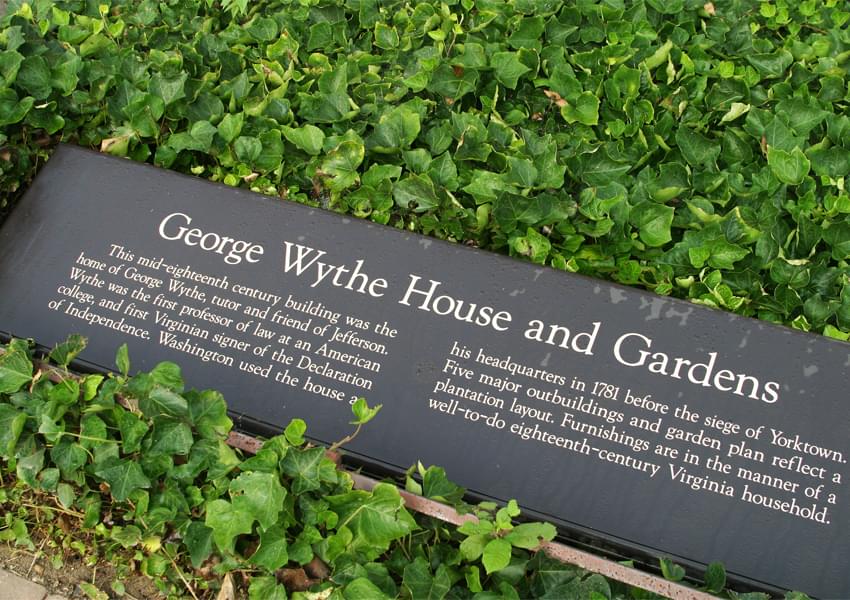
George Wythe House Museum
Flirtation, murder by poison, loyalty, and a sense of duty have caused the hauntings.
DESCRIPTION
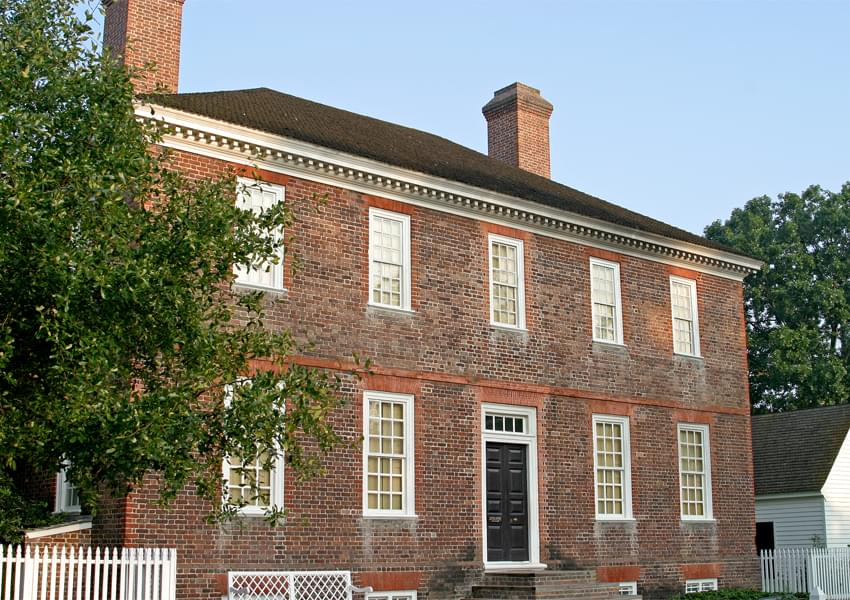
The 3,888 square ft George Wythe House Museum is considered to be the finest Colonial style house in the Williamsburg Colonial Village. It is thought to be “one of the best examples of Tidewater Virginia residential architecture of the Georgian periods.” It is no wonder that whoever owned it tried to maintain the structure.
There is no wasted space in this well-designed home. It is a mid-1750s, sturdy red brick, rectangular structure with two full stories, built to last with strong structural bones. This house was a labor of love, with the best construction work available. For example, the brick masonry of this house showcases “Flemish bond brickwork, with rubbed jams, corners, water table and gauged-brick belt course and splayed brick arches.” (https://www.dailypress.com/features/history/dp-nws-wythe-house-refurnished-20160206-story.html)
The facade of the house is made of red brickwork and white woodwork. It has two windows on either side of the door, with the bricks around them being rubbed. The first floor has five windows in alignment with the windows on the second floor.
The house was constructed using the double-pile plan, meaning two rooms deep. The First Floor has the customary Colonial Hall that runs from the front foyer to the back door. There are four rooms off this hall on the first floor, The front two rooms are the dining room and the parlor. The two back rooms are the study/another bedroom and library.
The staircase to the second floor is in the back of the house. The second story has four bedrooms off the 1/2 hallway, as the staircase takes up some of the room. George Wythe and Elizabeth Wythe each had their own bedrooms, connected by a door. The other two bedrooms were for guest accommodations and a possible student border.
There are pine floors throughout the house. Beautiful interior detailing, and artistic woodwork adds so much! Two great chimneys provide a fireplace in all eight rooms of this house.
The symmetrical gardens outside are lovely. The buildings on this property that would’ve been there in Colonial times include a smokehouse, external kitchen, laundry, poultry house, lumber house, a well, a dovecote and a stable.
HISTORY
Between 1752 and 1754, architect, designer, and planter Richard Taliaferro built this house for his family, at the same time he was renovating the Governor’s Palace. In 1755, his daughter, Elizabeth married the love of her life, trailblazer George Wythe. As a wedding present, Taliaferro gave this beautiful house to George and Elizabeth. They had no children together. Their one child died in infancy.
George Wythe accomplished much in his lifetime. He became a distinguished lawyer, and the first Law Professor at the College of William & Mary. Besides teaching concepts of law, George Wythe’s goal was to train his students for leadership. Thomas Jefferson, John Marshall and Henry Clay were taught and mentored by George Wythe.
Because George and Elizabeth had no children, they would take in college students, like 16-year-old, orphan Thomas Jefferson. Young Thomas Jefferson had a close relationship with George and Elizabeth. They became like surrogate parents for him, giving him emotional and moral support he needed and helped to mold him into the leader he became.
George Wythe became a courageous legislator, serving in the House of Burgesses from the mid-1750s until 1775, first as delegate and after 1769 as a law clerk. During his service as a legislator, George Wythe was a signer of the Declaration of Independence.
During the late 1770s, Sir Paten Skipwith and his wife Ann, who were good friends of George and Elizabeth, would come and enjoy extended visits here. This occurred until Ann Skipwith died. The official story is that she bled to death after a miscarriage in one of the Wythe House guest rooms.
A few months before the arrival of George Washington and his men in 1781 and the Battle of Yorktown, George and Elizabeth Wythe moved quickly to safer ground. Their house became headquarters for George Washington and officers who were busy planning for the Battle of Yorktown. French troops also came into Williamsburg. There is a room in the George Wythe Museum House that is set up depicting what it looked like with the officers living and planning there.
After all the soldiers left, George and Elizabeth came home. In 1787, Elizabeth died in the home at the age of 47. In 1791, after turning his Williamsburg House over to his late wife’s family; the Taliaferro clan, and quitting his College teaching job, George moved permanently to Richmond to become a judge on Virginia’s Court of Chancery for only a year;handling those particular cases that could not be resolved in common law courts.
George Wythe freed his two remaining slaves; cook Lydia Broadnax, 66, and a 16-year-old mulatto boy named Michael Brown. They lived with him in his home in Richmond. George Wythe started a private law school in 1793, as he missed teaching.
In 1806, at the age of 80, he was living in Richmond where he was murdered by a greedy relative by poisoning. Uh Oh!
During the 19th Century, The George Wythe House was owned by many families. It was altered and enlarged to meet the needs of the inhabitants. In the 20th Century, it was restored twice and bathrooms, heating and electricity were added. In 1926, the future of the house was secured when The Reverend Dr. Goodwin bought it to be the Bruton Church’s Parish House. The Reverend Dr. Goodwin was a mover and shaker who worked hard to make Williamsburg Colonial Village a reality.
In fact, the first restoration was supervised under Goodwin’s watchful eye. Offices for Colonial Williamsburg, a restoration organization, made its home on the second floor, becoming the headquarters for restoration of the Colonial city of Williamsburg. Rev Goodwin took great personal care of this beautiful home until the historical restoration organization could take over this gem of a house and its property in 1938.
During the early 1940s, Colonial Williamsburg did a full restoration of The George Wythe House, and have been faithful maintaining this jewel of Colonial Georgian architecture! During the years before it became a house museum, some rooms were rented out to overnight visitors to defer costs.
Since the time when the George Wythe House became a house museum, the interior rooms have long been set up in the style of George and Elizabeth Wythe, with furniture and art that they may have had in their home while alive and living there. In 2015, the 300th year anniversary of the building of this historical house, the rooms have been arranged as they were when George Washington and his officers stayed here before the Battle of Yorktown. Visitors might feel as if Washington and his men had just stepped out for a moment, perhaps for dinner in a local pub. Today, one room is still set up this way.
HISTORY OF MANIFESTATIONS
The spirits of people who die because of a deliberate or accidental poisoning are sometimes angry, restless, and/or don’t want to give up staying in their favorite place just yet.
Monmouth Plantation, MS (Congressman General John A. Quitman and some other Congressmen from southern states were thought to be poisoned after arguing in support of slavery. Genera Quitman died a lingering death).
Queen Mary, CA (Officer William Stark accidentally poisoned himself when he grabbed what he thought was a liquor bottle).
Captain Benson Bailey House Museum, NE (The mentally ill neighbor of Captain Bailey had first poisoned Mrs. Bailey to get her out of the way, and then did the same to Captain Bailey when he didn’t see her as a love interest. The murderess was never caught).
George Wythe House Museum, VA (In 1806, George Wythe’s ne’er-do-well great nephew George Wythe Sweeney had also moved in with him in Richmond. The younger Sweeney had large gambling debts and would forge his uncle’s name on checks. This great nephew was also next in line to inherit most of George Wythe’s estate.
Apparently, the younger Sweeney couldn’t wait, so he poisoned George, and the 16-year-old ex-slave Michael Brown. The cook Lydia Broadnax knew at once how it was done. She had earlier seen Sweeney add something to the tainted oatmeal. Michael Brown died and George Wythe bravely hung in there for two weeks in great pain, knowing who did this dastardly deed. George Wythe managed to change his will before he died.
George Wythe Sweeney was arrested for murder, but was let go despite the testimony of the cook, Lydia Broadnax. Despite the fact that her convicting testimony couldn’t be entered into a court of law because she was black, the court of public opinion believed her. The result was that George Wythe Sweeney was shunned by all and left Richmond as a ruined man, penniless.
The spirits of people who die as a result of great emotional upset by feelings of betrayal often find that death doesn’t help their feelings. If a pregnancy was lost as well, this would add to the emotional upset that causes spectral restlessness. If the person who is suffering kills himself or herself, this adds to their restlessness.
17 Hundred 90 Restaurant and Inn, GA (A naive young maid was swept off her feet and into bed with a sailor. When she became pregnant, he promised to come back and marry her. He never came back as he was only looking for a good time with a young lady. Desperate, pregnant and heartbroken, she then threw herself onto the bricks below.
Dumas Brothel, MT (Madame Elenore Knott fell in love with a married businessman, in 1955. They planned to run away together. The morning they were supposed to leave, he lost his nerve, changed his mind, and never came to pick her up. Elenore was devastated, lost hope of ever leaving her situation, and killed herself).
Plains Hotel, WY (A newly married couple checked in for their honeymoon. When their love-making hit some road bumps, the husband became upset with his new wife and went down to the bar, where he found a prostitute. He was planning to spit on his wedding vows and get back on his ill-performing wife. When he took so long, the wife went down to the bar and saw her husband leave with the prostitute. She followed them to the prostitute’s bedroom and went inside, catching him in bed with her. Enraged, the now distraught bride shot her newly beloved and his sex partner, and then shot herself).
George Wythe House Museum, VA (The official story of the demise of Lady Ann Skipwith is that she had a miscarriage in the guest room and died in her husband’s arms. Others disagree.
Another story says that Sir Peyton and Lady Skipwith while staying at the George Wythe House went to a ball at the Governor’s Mansion, where Sir Peyton left his wife to flirt with the ladies; especially Lady Skipwith’s sister. Perhaps Lady Skipwith was in the early stages of pregnancy and was overly-sensitive. Yet after she died, Sir Peyton did marry her sister. Hmmmm.
It is said that Lady Skipwith was so upset that she ran out of the ball, losing her red shoe on the steps. Sir Peyton did try to stop her, but she ignored him. Instead of following her home, it is said that he went back to the ball. This emotional upset is said to be the cause of her deadly miscarriage.
Others speculate that Lady Skipwith killed herself. She does seem to be reliving the night of her death, which can happen if a spirit killed itself. (Stranahan House, FL). However, she could just be upset over the circumstances that caused her death and miscarriage; especially if she overreacted).
The spirits of people who have enjoyed a special place while alive, sometimes like to visit and remember all the good times they have had there, perhaps gathering to be together once again, finding peace, especially if they had unpleasant deaths. The spirits of their family may stay with them to keep them company.
Glensheen Mansion and the Congdon Estate, MN (The spirits of murder victims Elizabeth Congdon and her nurse companion Velma Pietela still enjoy their home and estate, watching people and their events, which gives them peace about their violent deaths).
Moss Mansion, MT (Three members of the Moss family suffered and died from illness and ailments which immobilized them. The spirits of father Preston Moss and daughters Melville and Virginia enjoy their family home, free from infirmities).
Edith Wharton Estate: The Mount, MA (When Edith and her husband, Teddy, got a divorce, they had to sell their beloved estate, never to live there again while alive. As spirits, Teddy doesn’t have his bipolar issues, and they have continued their marriage and friendship there. The spirits of Edith’s friends also come and visit, enjoying themselves as they did while alive).
George Wythe House Museum, VA (The spirits of George and Ann Wyrthe enjoy their house, forgetting their earthly troubles. Other spirits apparently are keeping them and the living company. Lady Ann Skipwith tries to find peace here as well. The spirit of her husband has been noticed too).
MANIFESTATIONS
The Spirit of Lady Ann Skipwith
She is dressed in Colonial attire, and seems to enjoy residing where she died.
She is benign and friendly.
Residual Energy?
This activity plays over and over at the same time.
Around midnight, many have heard a peculiar clicking rhythm going up the main staircase.
She is running up the staircase in anger, after a spirited fight with her better half at the Governor’s Palace nearby.
On her way back to the house, she lost one of her dress slippers, and the strange clicking rhythm sound still heard is the sound she made with one shoe on and one shoe off.
Her Personal Appearances
Her apparition has been spotted coming out of her bedroom closet, dressed in a satin gown and red shoes.
She also has been seen sitting at her dressing table, combing her hair.
The closet in her guest room, where she stayed, likes to swing open.
In her old room, sometimes the living notice a lavender scent, a sign of her presence.
The Experience of The Custodian
One evening, a custodian saw a detailed, life-like apparition of a Colonial woman in an evening dress standing on the staircase.
Thinking she was a guide, he went over to speak to her.
Imagine his surprise when she melted into thin air.
The Spirit of Sir Peyton
His unseen presence has been felt and heard in the parlor.
He may come and visit Lady Ann.
Apparently, they are still discussing their issues.
Perhaps, he is trying to get her to come with him into the light.
The Unseen Spirits of Sir Peyton and Lady Ann Skipwith
The custodian once again witnessed paranormal activity.
After the house had been closed for the day, he heard a man and woman discussing something in the parlor.
As he walked down the staircase toward the parlor, to see who was in there, the voices got louder and louder.
When he opened the parlor doors, the voices were stilled and no one was there.
Perhaps they don’t want the living to know what they were discussing.
The Spirit of George Wythe and His Wife Elizabeth
Some spirits on the day they were killed grieve or show their anger at their death. (Old Deerfield Burial Grounds, MA)
Every June 8th, on the day of his death, he is in an angry mood.
When the George Wythe House was a bed and breakfast, guests sleeping in his room report feeling a firm and cold hand press down on their foreheads.
It is the supportive spirit of Elizabeth that calms him down, and redirects him to all the good memories they had together.
On other days, he may be reliving his good times, and may even have a little fun with the living.
The Experience of a Museum Hostess
Some unseen presence tapped gently on a hostess’s shoulder.
Turning around, she found no one in sight.
It may be the spirit of George or Elizabeth Wythe letting her know of his/her presence in a playful way.
Experiences of other Staff Members
They have seen and heard other spectral guests or residents who had connections to this house while alive, doing what still pleases them, going about their business.
Various employees have seen a ghostly Gentlemen’s Club, a cordial group of “spectral gentlemen,” sitting together in wingback chairs by the unlit fireplace in the study.
Perhaps the spirit of George Wythe hosts this gathering of old friends, who may be drawn back here because he is here.
Or, it could be spirits connected to another era, such as from the house’s church years.
The Spirits of Colonial-Era Soldiers
Some Colonial-Era soldiers, probably from the Revolutionary occupation before the Battle of Yorktown, have occasionally appeared to the living, and may be protective of the second floor.
They perhaps stayed there before the battle, but could’ve died. They have come back to this beautiful home to continue to be in service.
Still On Duty
The Hostesses are the main witnesses to the activity on the second floor.
Doors throughout the house open and close at will, especially on the second floor.
When the house was empty, hostesses heard furniture being moved around on the second floor.
“Halt! Don’t Go Further!”
The spirits of unseen guards make their presences known.
The air on the second floor landing, at the top of the stairs, is an area that often has unexplainable cold spots, even on hot days.
While walking through a frightfully cold spot, a hostess suddenly felt a presence try to push her back, for a few moments.
Others have been grabbed, as if they were trespassing.
PARANORMAL FINDINGS
A boatload of personal experiences have been and continue to be reported.
The spirit of Lady Ann Skipwith has been provoked by some people who kneel in front of the closet where her spirit dwells, and say, “Lady Skipwith, Lady Skipwith, I found your red shoe.”
Williamsburg Ghost Adventure Tour Guide 2013 reported that the spirit of Lady Skipwith rushes over with a loud noise to get her red shoe.
Small groups of ghost hunters have quietly investigated on a low level scale of this place with good results.
STILL HAUNTED?
Yes Indeed, for a variety of reasons. Who can blame them? George Wythe House Museum is a beautiful home that many have enjoyed! Restless spirits find some peace from what is still upsetting them.
LOCATION
112 Palace Green Street,
Williamsburg, Virginia 23185
The George Wythe Museum House is located on the west side of Palace Green St., near the intersection of Palace Green and Prince George Street. This museum is one of the 88 homes located in the Williamsburg Colonial Village which is a National Park, and is on the list of National Register of Historic Districts. The Williamsburg Colonial Village is a museum made up of 160 renovated buildings located on 175 acres.
This fully restored 18th century Colonial Williamsburg Village is experienced like a living museum, where visitors can see how the colonists lived, and experience a taste of colonial life. People dressed in authentic costumes offer various demonstrations of crafts, etc. Each house museum has its own entrance fee, which helps to pay for programs, maintenance and further restoration/ maintenance of the outside buildings.
SOURCES INCLUDE
- http://hauntedva.blogspot.com/2010/11/wythe-house-williamsburg-va.html
- https://www.loc.gov/resource/hhh.va1028.sheet/?sp=10
- https://colonialghosts.com/the-george-wythe-house/
- http://www.history.org/almanack/places/hb/hbwythe.cfm
- https://www.dailypress.com/features/history/dp-nws-wythe-house-refurnished-20160206-story.html
- https://www.yelp.com/biz/george-wythe-house-williamsburg
- http://research.history.org/DigitalLibrary/view/index.cfm?doc=ResearchReports%5CRR1640.xml&highlight=
- http://www.womenhistoryblog.com/2009/08/elizabeth-taliaferro-wythe.html
Our Haunted Paranormal Stories are Written by Julie Carr
Our Photos are copyrighted by Tom Carr
Visit the memorable… Milwaukee Haunted Hotel





















































Your Road Trip to Milwaukee’s Hot Spots