Mandan North Dakota
Custer House
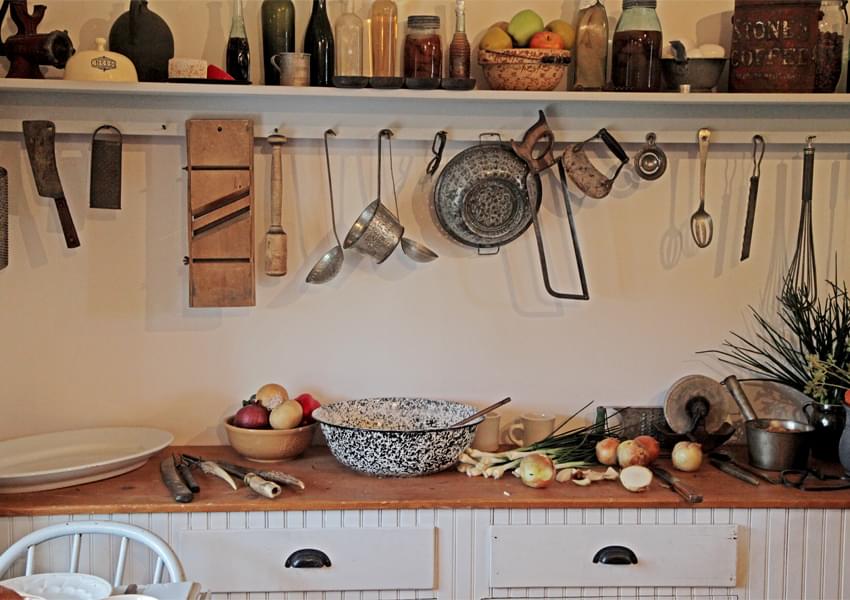
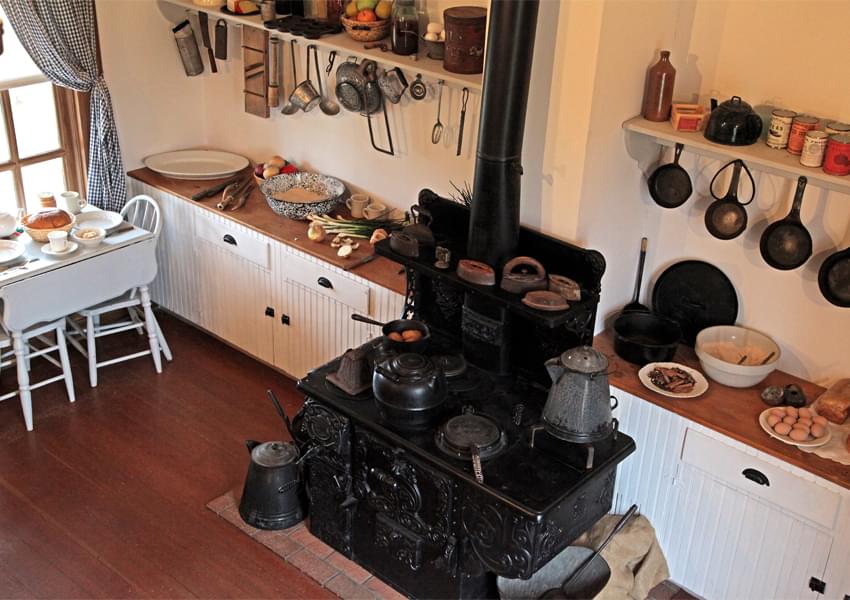
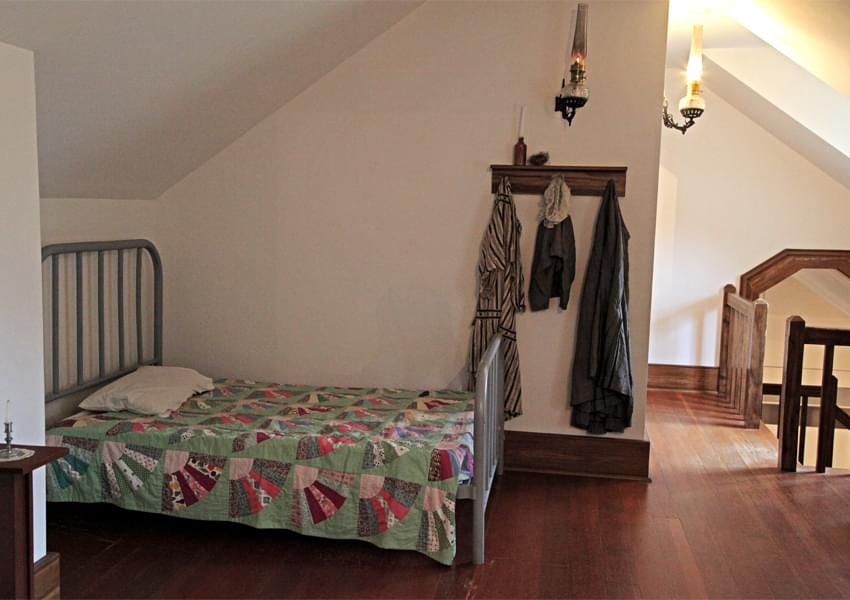
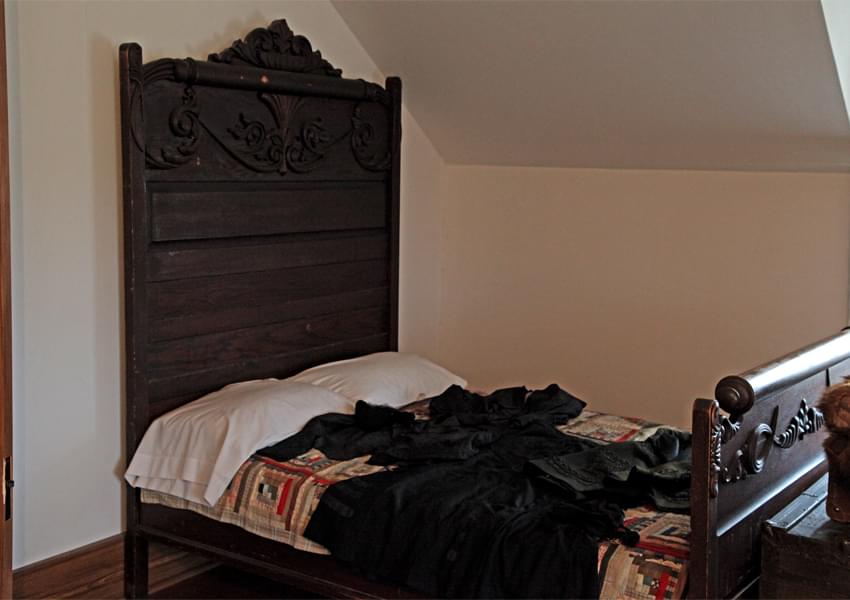
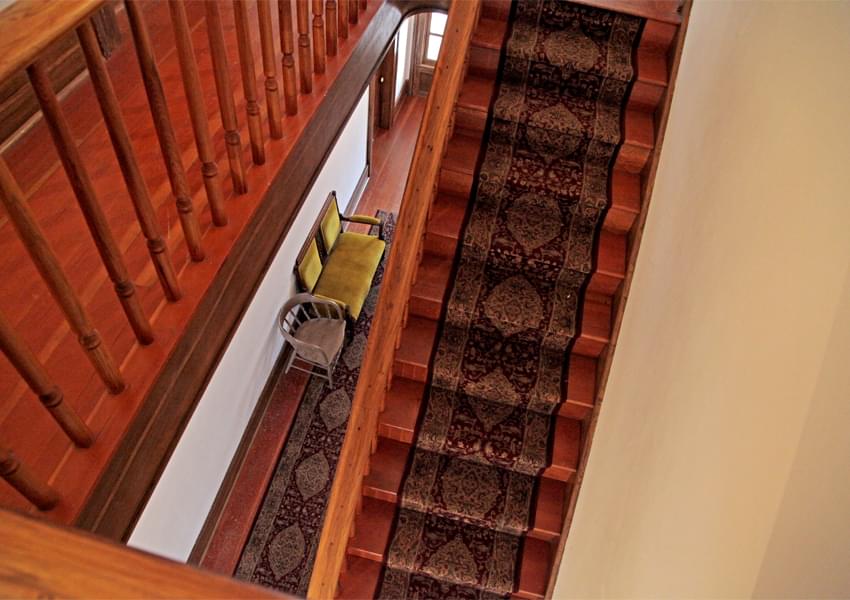
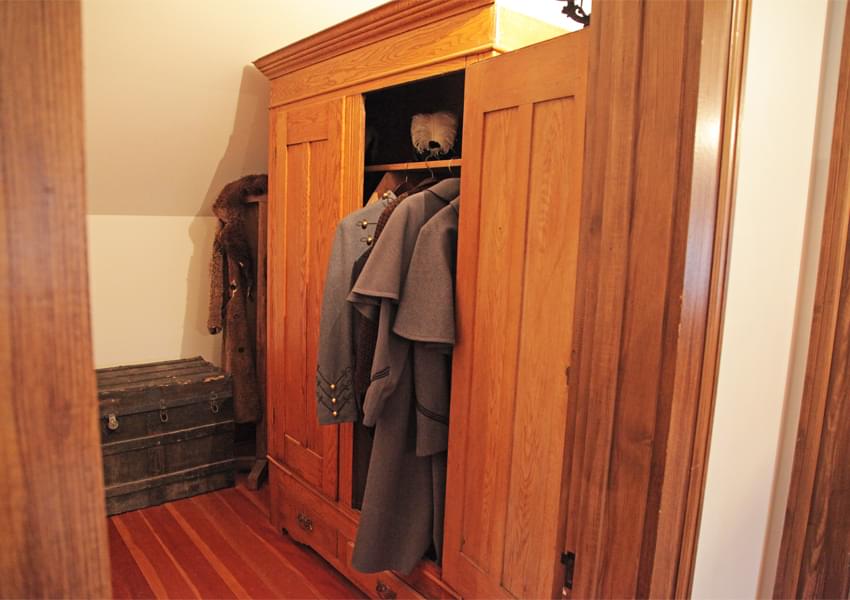
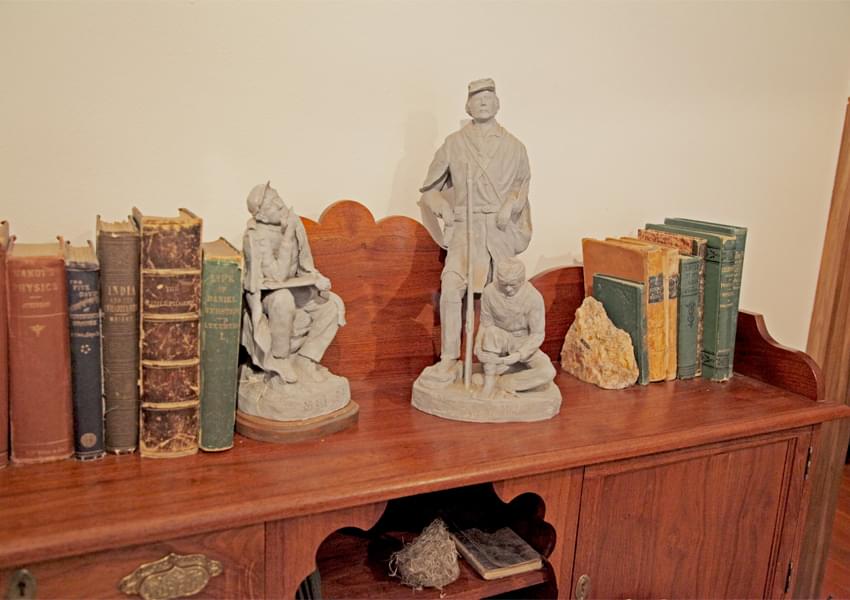
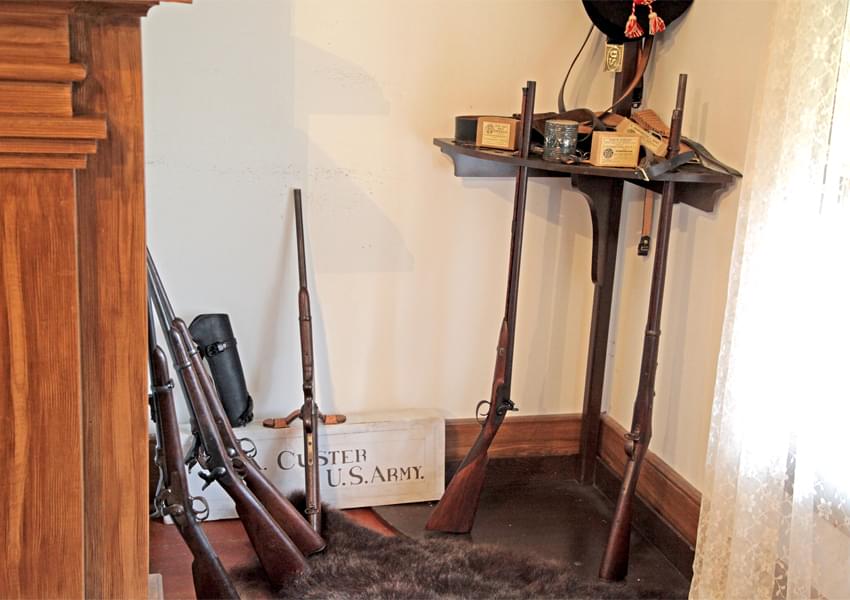
This reconstructed home brings comfort to the Custer family and other casualties of Little Bighorn.
DESCRIPTION
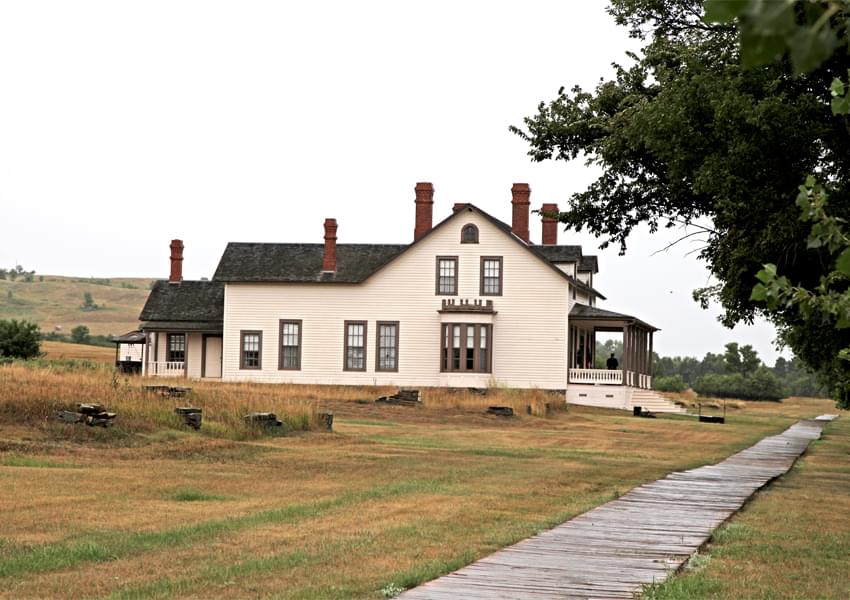
The Custer House is a handsome, wooden, two story home with a wide front porch, having all the areas and space needed for a proper home for the commander of a fort. Using Custer’s own 1874 plans, The Fort Abraham Lincoln Foundation, a successful non-profit organization, rebuilt Custer’s House in 1989. Tom and I visited Fort Abraham Lincoln on a road trip, and took The Custer House Tour. As of the summer of 2012, The Custer House is the only one of the officer’s homes that has been rebuilt, though the house of Lt. Col. George Custer’s brother, Tom Custer, an honored Civil War hero, is the next home scheduled at some date to be the next to be rebuilt.
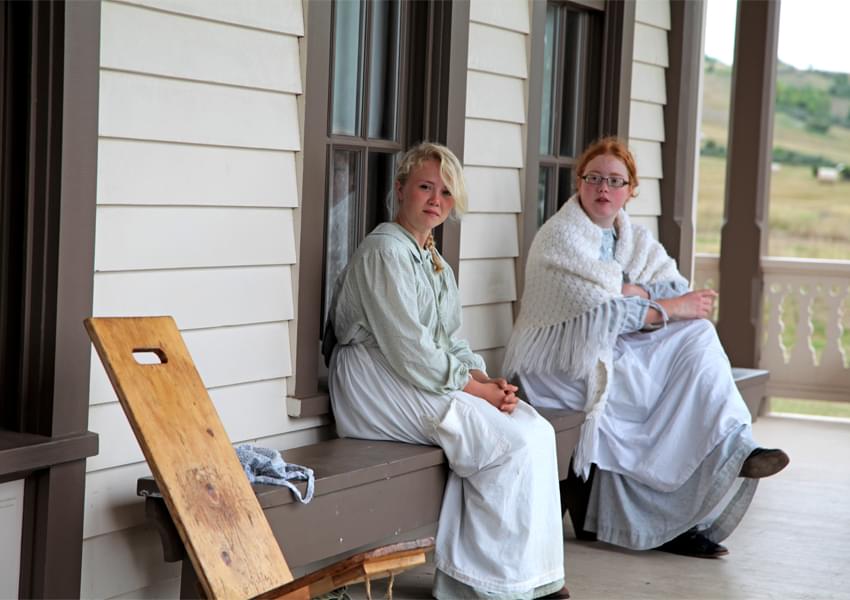
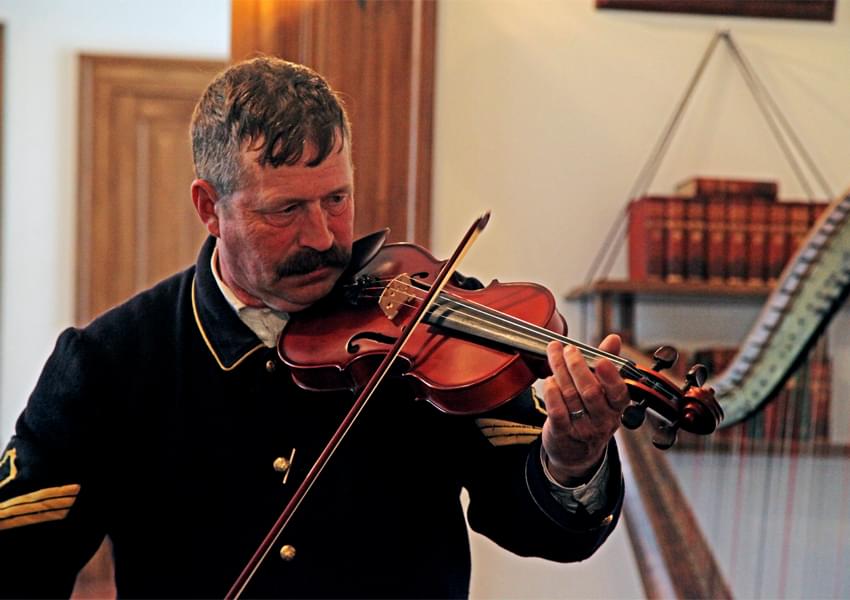
 The gathering place for the tours of this home is on the lovely, long front porch. We sat on the benches there, taking refuge from the rain. I went on ahead to the house as Tom had to get something out of the car. As I came onto the front porch, I had stepped back in time, as if it was the year 1875. A sergeant, dressed in his 1875 uniform, met me and asked where my male escort was, giving the advice that I should walk with my husband next time, as a principle of safety.
When we had all gathered on the front porch, sitting on the benches there, enjoying the dry spot and the view, the sergeant explained that since Mr. and Mrs. George Lt. Col. Custer were at town attending the opera, we could take a tour of the Custer Home. The sergeant then asked one of the young people with us to read the house rules that included “Staying together, and NOT TOUCHING anything”, or face being put in jail!!
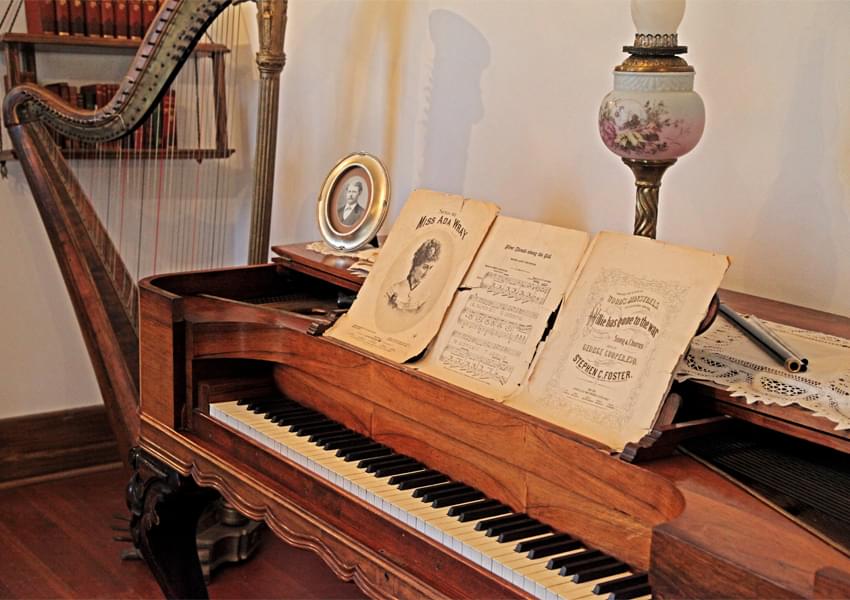
On the first floor we were led to the parlor, where the good sergeant played the fiddle for us, “Oh, Susanna”, near the piano. He invited a young person to play a song on the piano as well. The parlor was home to lots of family pictures, Mrs. Custer’s favorite curtains, other personal artifacts, and period furniture. The parlor rumble doors were of interest. We continued on, visiting the dining room, kitchen and other common rooms on the first floor, before going upstairs.
On the second floor, we visited the servants’ rooms, guest rooms, and the master bedroom, as well as the study, and officers’ game room, all set up like these areas would have appeared in 1875. Our guide had fun with us in the officer’s game room, which had a pool table, and some small tables where card games, etc. were played. The sergeant quizzed us about what kind of card games we played, being sure to state that no gambling games like poker were allowed. Classic card and board games like cribbage, chess, checkers, bridge, were games of the day; nothing else was accepted!
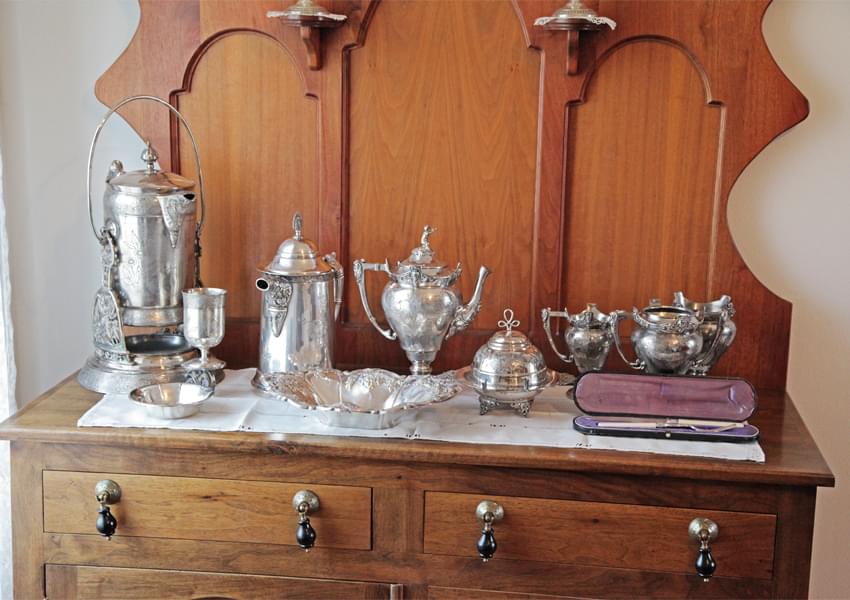
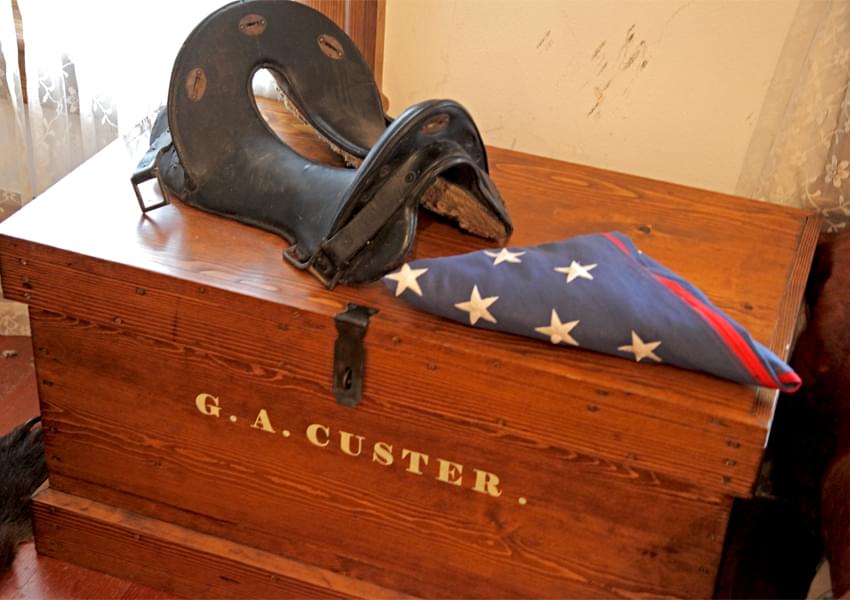
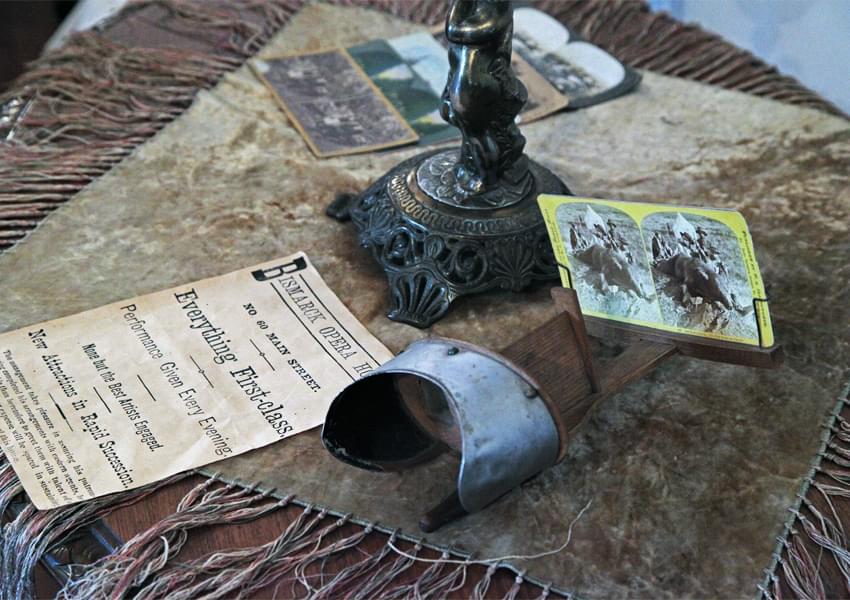
Libby Custer was a detail-oriented person, and a careful manager of her household. She had written down the inventory of all the furniture they had purchased for their home. She did so in such detail that many furniture pieces that are on display in the various rooms have been reconstructed according to Libby’s descriptive accounts of their possessions. Besides seeing many items/furniture reconstructed from the 1875 era, decorating the various rooms, actual artifacts/items that belonged to the Custer family are also on display. Descendants of Libby donated many personal belongings of the Custers, including many memorable photos that are displayed throughout the house, books, papers, Custer’s favorite writing desk, Libby’s favorite wicker rocking chair, some of her clothing, and some dishes.
HISTORY
Fort Abraham Lincoln was established in 1872, to protect the city of Bismarck, and the new railroad construction, from Indian attacks. A small infantry post was established on a hilltop, but proved to be inadequate. So, in 1873, a full military fort was built, Fort Abraham Lincoln, that became the headquarters for six companies of cavalry, with all the bells and whistles allowed for a standard military installation, including: three soldiers’ barracks, a commissary, a granary, a stable, probably a hospital, a parade ground, and officer row, with homes for the officers and their families. Each officer had his own home, and they all looked basically alike, probably built with the same blueprints.
After the original 1873 house built for Custer burned to the ground one cold winter, George Custer made lemonade out of lemons by making changes in the original house plans to improve the layout and features. Fort Abraham Lincoln was located way out in the country, far from civilization as most knew it. Lt. Col. George and Libby Custer felt the need for a slice of civilization, of normalcy for themselves, and for the officers and their wives who were stationed at Fort Abraham Lincoln.
Lt. Col. Custer wanted a home that he could be proud of, that reflected his status a bit, (he craved the spotlight), and be a place to entertain his officers, as well as hold meetings. Common rooms were large to accommodate groups of men, and an officers’ game room was also located here, where issues could be discussed over a friendly game of pool.
Libby wanted a nice, upscale house, that provided her with a sense of a civilized life that she was missing, and was big enough and suitable to entertain all the other officers’ wives. As the wife of the base commander, she felt she should spearhead a support group for these military wives, so far from home, whose husbands faced danger during their assignments off base. They could all experience a comforting place to congregate and feel that they had some civilization to relish, friendships to develop, right there in the middle of frontier land.
Everything from the windows to the furniture was brought in by train, and boat, creating a civilized home to be enjoyed by the Custer family, and other military personnel and their families. Surrounded by their favorite possessions, developing morale, and relationships amongst the people were goals all achieved, pleasing and comforting for all involved.
George Armstrong Custer’s two brothers, equally brave Tom and Boston, as well as a nephew, Henry Armstrong Reed, were also stationed at Fort Abraham Lincoln, giving them all a special place to gather as a family as well.
However, George and Libby Custer, as a living couple in this world, only got to enjoy their home until that fateful event, on June 25th, and 26th, 1876, known as the days of The Battle of Little Bighorn. The Seventh Cavalry, along with two other units from different forts, were given the assignment by the Federal Government of forcing the Native Americans who refused to sign the 1868 treaty, The Great Sioux Nation; the Lakota Sioux, the Northern Cheyenne, and the Arapaho tribes, back onto their assigned reservations.
When the 7th Cavalry caught up with the AWOL, angry Native American forces, the 7th Cavalry were badly outmanned and outgunned. On that fateful day, the Seventh Cavalry didn’t have a chance; though it was actually the tactical error made by their commander, Lt. Col. Custer, that got them into this hopeless, terrifying situation in the first place.
Custer perhaps thought a little too much of his abilities, and too little of the abilities/numbers of the enemy. He also had a driving need to be recognized, and was known to take risks in battle. He was hoping for another victory, taking a risk to achieve glory and recognition; a strategy that had served him well during the Civil War, and resulted in advanced rank.
However, Custer tragically refused to listen completely to wiser voices, in particular to his own Native American scouts, who knew what they saw. To be fair, George Custer was a well-trained, brave commander, and was determined to stick with the battle plan, strategized by his commanding officer, General Philip Sheridan, that involved two other Cavalry units. He did alter his original plan of attack, but it wasn’t enough this time to avoid disaster.
 After looking at a biography of the man, I can see where this need for recognition and being in the spotlight came from. He was one of five children, and was sent to live with a relative at some point. He was disciplined a lot at West Point for the practical jokes he played on fellow cadets. I think his behavior reflected an unmet need for love and attention as a child that haunted him his whole life. He dearly loved his Libby, and she dearly loved him. He valued this relationship above his career, and was willing to be suspended for a year for an unscheduled visit with his wife, who needed him for some dire reason.
The men of the Seventh Cavalry who rode with Custer in this campaign, including two of his brothers and one nephew, suffered painful and terrifying deaths at the Battle of Little Bighorn. The dead were buried where they fell, and the whole battlefield eventually became a National Park: Little Bighorn Battlefield National Monument at Crow Agency.
Both sides of this battle were honored. A feeling of sadness, and tragedy fills the soul. It is sickening. The irony of it all is that the Black Hills were an area originally deemed to be on the Indian reservation in the original 1868 Treaty, but were removed soon afterward, when gold was discovered.
Life went on at Fort Abraham Lincoln. The widows and their families moved back home, and new Cavalry troops and officers were sent to replace the ones that were killed in the line of duty, but change was soon to come. In 1883, Fort Abraham Lincoln’s 7th Cavalry units were sent to defend Fort Meade, as the railroad was completed, lessening Fort Abraham Lincoln’s importance to the area. The post was decommissioned and left to the elements in 1891, by order of Congress, after a new Fort Abraham Lincoln was built on the other side of the river. Hmmmm… Perhaps paranormal activity inspired the building of a new fort on the other side of the river!
However, all the buildings didn’t stand forlornly for years, to be destroyed by the weather. Just a year later, settlers and townspeople dismantled the entire fort, for the nails and wood, not letting such precious commodities go to waste.
Though declared a state park for some years, it wasn’t until 1932, during the Great Depression, that the buildings began to be rebuilt. The Civilian Conservation Corps built the cornerstones where the fort used to be. In 1934, this same group built a visitor center, shelters, and roads. They also reconstructed military blockhouses and placed cornerstones to mark where fort buildings once stood, as well as replicating Mandan earthen lodges that once existed near the Fort.
The Fort Abraham Lincoln Foundation, a non-profit corporation, was formed 25 years ago, and has been a mighty force in rebuilding not only The Custer Home, but also the Commissary, Granary, Central Barracks, Mess Hall, a 7th Cavalry Stable, as well as a replica Mandan village, called “On-a-Slant Village.” Great care was taken to historically restore this important American fort, and they were very successful in raising the boatload of money needed to do so.
The Fort Abraham Lincoln Foundation holds a variety of fundraising events to keep development funds rolling in, that are both entertaining and profitable.
The price of admission to tour The Custer House, also includes a tour of the “On-a-Slant Village.”
On the grounds of Fort Abraham Lincoln State Park, there is also a campground and picnic area.
HISTORY OF MANIFESTATIONS
When a building is historically restored, and items held in high regard also are brought in, the original inhabitants of the property can be so thrilled, that they also take up residence in spirit form, or make visits.
Adams House, SD (Though the spirit of W.E. Adams never left his home, after it was stabilized and fully restored to the way it was when he was alive, his spirit made himself known to the staff and visitors on the house tour).
Hartford Twain House Museum, CT (After the creaky shell of the once impressive Mark Twain Home was transformed into a fully restored Twain House Museum with many of the family’s personal belongings on display, the whole family of spirits moved back inside their forever home).
Pittock Mansion, OR (By 1962, the mansion was not only an expensive fixer upper opportunity, but had been heavily damaged by the 1962 storm. Pittock’s grandson, Peter Gantenbein, and Eric Ladd thought about selling the property to developers because no one wanted to buy it in the condition that it was in. The people of Portland and the city leaders raised $225,000. After it was fully restored and opened as an authentic House Museum, the spirits of Henry and Georgiana Pittock are happily puttering around here, trying to help).
The Custer House Museum, ND (The spirits who loved this place must be thrilled to not only see their old, comforting habitat historically restored, but their actual favorite things as well being put on display).
When people dress in period clothes, this can act like an environmental trigger that draws spirits into our world to communicate.
Gettysburg Battlefield, PA (Civil War reenactors have had experiences with solid looking spirits of Civil War soldiers trying to help them).
Fort Pulaski, GA (When a group of actors dressed in Civil War uniforms on a break from filming GLORY visited the fort, the lifelike spirit of a Confederate Lieutenant approached them, and reprimanded them for not saluting him. He ordered them to fall into line because a Union attack could happen at any time, which they did to go along and put on a show for the other visitors. This officer then gave the order to face about, then vanished into thin air.
Mantorville Opera House, MN (The spirits of former entertainers/thespians who yearn to continue their acting careers but can’t, find ways to make themselves known, by appearing in the actors’ dressing rooms, dressed in the same costumes as the present-day performers, who are getting ready for a production in front of a live audience).
The Custer House Museum, ND (The fact that Custer House Staff docents are dressed in period clothing has been noticed by the spirits, adding another element of comfort and giving them a feeling of being welcomed).
Sometimes, circumstances or consequences that people experience during their time in this world, can cause them to lose their home, which can encourage a lot of visiting, residing in this home in their afterlives.
Hemingway House, FL (The spirits of Ernest and Pauline are together again in their old favorite place. They seem to have let their past marital troubles go,which had caused them to sell their home. They are a cohabitating spectral couple again, willing to share the same space to find personal peace).
Frick House, PA (The Frick family enjoyed their home and community until 1905, when father Henry moved his family to New York City. His daughter Helen sorely missed the mansion in Pittsburgh, and her life there, as did her mother Adelaide).
LeDuc Mansion, MN (The depression hit the LeDuc family hard and in 1941, after struggling through the 1930s, they sold their beloved summer home estate to a family friend, Carroll Simmons).
The Custer House Museum, ND (Lt. Col. George Custer and Libby Custer only got to live in their house together for less than two years, before the Battle of Little Bighorn).
Entities sometimes stay in their home or business because loved ones are still there, either alive or in spirit form.
Stranahan House, FL (The Lady of the house shows loving care to both the living and the dead).
St. James Hotel, NM (The spirit of the past innkeeper’s wife Mary Lambert, is still trying to get the spirit of her rambunctious toddler Johnny to go to the light, but he is still having too much fun!).
The Whaley House, CA (The spirits of Thomas and Anna Whalely take care of the spirit of their toddler son Thomas and try to comfort the inconsolable daughter Violet, who killed herself because of her failed marriage).
The Custer House Museum, ND (Perhaps Lt. Col.. George Custer visits and stays at the Custer House to be with and comfort Libby, who still mourns her loss. This is a better pastime in the afterlife, than dwelling on past mistakes, and the huge consequence of the mistake, by touring the scene of the battlefield and exhibits there).
People who form a close support group to bolster each other’s resolve to sometimes endure danger and hardship, and have fun socially as well, will continue to do so after they all pass into the spirit world. If they as a group suffer a huge blow, they can get stuck in the emotion of the moment.
General Wayne Inn, PA (The spirits of Hessian soldiers who fought for the British forces during the Revolutionary War still like hanging out at their favorite place, getting their chuckles teasing the living and drinking the tea served to living guests).
The Alamo, TX (The brave frontier men who tried to defend it and were killed together while doing so, still hang out together).
Fort Stanwix, NY (Staff and visitors have seen apparitions of soldiers in period uniforms, both British and American colonial dress, in various spots around the fort).
The Custer House Museum, ND (Lt. Col. George Custer perhaps also comes to lift the spirits of his fallen officers who visit the home, and to see his brothers and nephew as well.Libby Custer had gathered all the officers’ wives into a support group, a familiar strategy for many military wives throughout history. On that fateful day in 1876, the women all felt an unsettled feeling of impending doom, and had gathered together at Libby’s home. They were altogether when they heard about the disaster at Little Bighorn, and they all grieved together).
MANIFESTATIONS
Both Mr. and Mrs. Custer apparently have moved back into their house, to enjoy once again their beloved home, filled with all their memorable pictures, desks, and other items they held dear. Spirits connected to the 7th Cavalry and their spouses also reside or visit.
General Activity Experienced
Usual telltale signs of spirits being present happen here.
Cold spots are felt, disembodied voices are heard, and movements and images of spirits are seen in just a flash.
Doors open and close at will.
Lights turn on and off on their own.
The feeling of being benignly supervised, and being touched as well in a kindly manner have been experienced.
The Spirit of Lt. Col. George Custer
When tired of walking around the Little Bighorn Battlefield National Park and its museum, Custer’s spirit comes home to visit his house, built to his own specifications, as well as to be with his wife, also there.
His presence is felt, and male EVPs have been caught, suggesting that he is present.
The Spirit of Mrs. Libby Custer
She is still in mourning, in between being a hostess to the living, and trying to be helpful to staff.
A woman wearing a black dress has been seen, looking out of a second-floor window of the Custer House, probably her bedroom.
The formerly well-made bed in the second floor bedroom, used by Mrs. Custer when she lived here, was discovered to have the indentation of a human form in it, the next morning when they opened.
The spirit of Mrs. Custer keeps her chin up, despite her sorrow, and likes to be the spectral hostess and go on the tours of her home.
On a walk-through with a paranormal group, the EVP of a woman, thought to be her, reminded the tour guide to point out the pictures on display.
The Spirits of the Wives of Custer’s Officers
These spectral ladies seem to keep Mrs. Custer company.
Heard by many that unexplainable disembodied moaning and wailing sounds, perhaps reliving the news of the death of their loved ones: George and brother Tom, and nephew Henry, plus other officers.
Appreciation of Handsome Docents
One or two of these women seem to have developed attachments to male tour guides Scott and Matt, according to EVPs caught on tape.
Besides being cute, they look great in their uniforms.
The Spirits of Male Officers of the 7th Cavalry
They make themselves feel better by visiting or residing in the Custer House, like they did while alive.
Disembodied male voices have been heard coming from the billiard room.
Male EVPs caught by paranormal groups also suggest their protective, friendly presences.
PARANORMAL FINDINGS
Since the reconstruction of The Custer House, spirits have moved back in and have made themselves known to the staff, who have had many personal experiences. It seems that George Custer himself as well as other spirits enjoy following around the tours and paranormal investigators, listen in on conversations, and contribute. All spirits are friendly and welcoming.
In August of 2009, Dakota Paranormal Investigators did an investigation at Fort Abraham Lincoln State Park. They caught hard evidence in the Custer House, pointing to a male and female in residence, probably Lt. Col.. George Custer and Libby Custer.
During a walk-through with a staff member, one of the investigators asked if any of the items in the house were from the original family. While in the kitchen, the staff member showed them one of Libby’s plates. This EVP was captured exactly when the investigators started to take pictures of the plate and other items.
EVP 22 Clip “No Pictures!” (female voice), “Couple Pictures” (male voice). (Perhaps two spirits setting the picture taking rules! Sounds like Mr. and Mrs. Custer)
This EVP 23 Clip was captured in the Custer House Parlor. The investigators were sitting around and talking with Scott (Fort Abraham Lincoln Staff) about the Battle of Little Bighorn and captured this EVP:
“More Of The Men Have Been Dying” (Young man’s voice). Perhaps Custer’s brother, Tom, or another 7th Cavalry officer who witnessed it all and died there.
Scott and Matt, tour guides, who dress in military uniform as do all the docents, apparently are much appreciated by a female spirit or spirits.
The investigators were on the main floor and one of them was telling a story to Scott (Fort Abraham Lincoln Staff), and during his story, an EVP (24 Clip) of a women in a southern drawl said, “Love Ya’ll Very Much,” and towards the end of this clip, another EVP of a woman saying “Scott,” is heard.
Matt, another tour guide, apparently is also considered a catch as well.
EVP 27 Clip “I Love You Matt” * EVP 28 Clip “I Want You.”
STILL HAUNTED?
A big YES INDEED!
The spirits of Mr. and Mrs. Custer are enjoying their forever home once more while being the welcoming hosts to visitors, and the staff helpers.
The other female spirits still mourn their lost husbands, but also notice the cute staff members in the present world.
The tour docents are never alone, and have friendly, appreciative company when they lead people throughout the house.
LOCATION
3448 Chateau Road
Mandan, North Dakota
Website: fortlincoln.com
The Custer House can be found in Fort Abraham Lincoln State Park, seven miles (11 km) south of Mandan, North Dakota. It sits in the middle of what was officers’ row, with a clear view of the parade grounds, and the other reconstructed buildings.
SOURCES INCLUDE
- The Ghost Hunter’s Field Guide
by Rich Newman – Llewellyn Publications 2011 - militaryhistory.about.com/od/1800sarmybiographies/p/custer.htm
- dakotaparanormal.com/EVP-s-Captured.html
- Custer House Tour
- http://www.hauntin.gs/George-Custer-House-at-Fort-Abraham-Lincoln-_Mandan_North-Dakota_United-States_551
- en.wikipedia.org/wiki/Fort_Abraham_Lincoln
Our Haunted Paranormal Stories are Written by Julie Carr
Our Photos are copyrighted by Tom Carr
Visit the memorable… Milwaukee Haunted Hotel













































Your Paranormal Road Trip
VIDEOS TO WATCH:
The Haunted History of the Custer House
The Custer House: A Haunted History
One Of Our SCARIEST Videos EVER At The Most HAUNTED HOUSE in North Dakota | The Paranormal Files
Paranormal Investigation At The Custer House !!
Haunted Tour of the Custer House 2018